

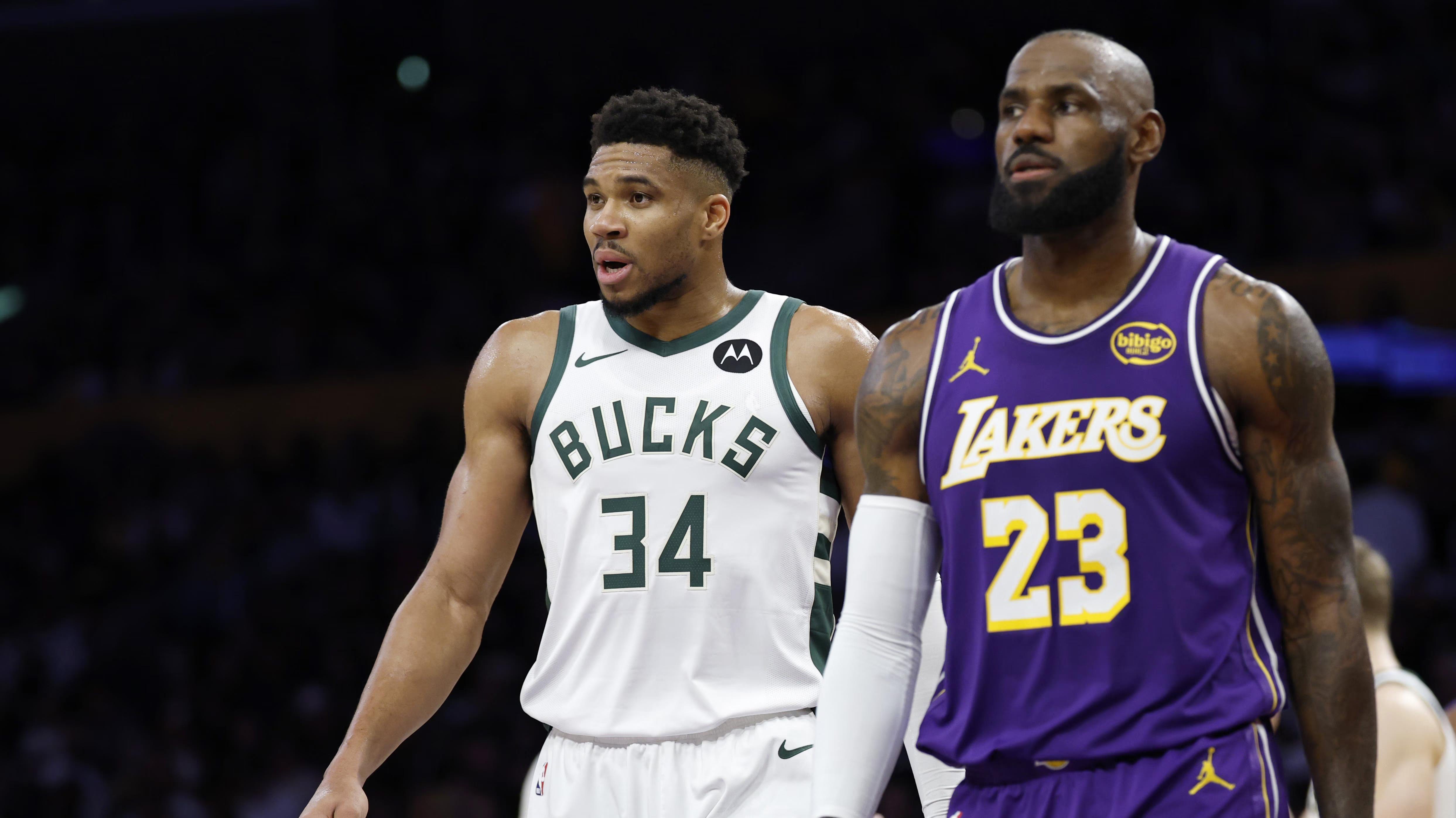
The LeBron James Bob Does Sports Memphis controversy continues to churn. Perhaps it would more accurately be called the LeBron James Nashville controversy. In HoS guest Bomani Jones’ view, the invocation of Nashville as the better alternative is what’s triggered a lot of offense:
Nashville is the rare city in the South that isn’t really associated with a Black presence.
I’ve never been to Nashville and find it hard to gauge its viability as an NBA city. I know the Tennessee capital is so hot right now, but it’s a mid-sized market with an NFL and NHL team already. I’ll stick up for LeBron on two counts, though: 1. If we want James (and other superstars) to dispense with manicured pretense, he’s being honest and 2. He’s saying something that other NBA players have.
What’s funny is that LeBron’s self defense revolves around pointing out that he’d also slighted Milwaukee. The idea seems to be that James isn’t racially targeting his disliked locales because the Midwest got rejected as well.
Did I say I don’t like Black people? I said Milwaukee, as well. I’m 41 years old, there’s two cities I don’t like playing in right now. That’s Milwaukee, and that’s Memphis. What is your problem with that? I don’t like going home either, shit and I’m from there.
It’s true. LeBron named Milwaukee as the other town he’d avoid playing for and that comment didn’t hit the aggregation bloodstream. To what Bomani was saying, Memphis codes as Black, making its mention controversial in this context. But Milwaukee, not that anyone appears to care, is a fairly Black city, to the degree of having more Black people than White people. A city in Cheesehead Wisconsin doesn’t culturally code as Black, though. At this point, Milwaukee is roughly twice as Black as Oakland, but that’s not how it feels in an American culture. Memphis is Hustle & Flow and Milwaukee is That '70s Show.
My dated references aside, LeBron and other NBA players are betraying a broader NBA problem, right at the moment owners are looking to potentially expand: While the league would reap tens of billions in fees from including two new markets, the NBA doesn’t currently have 30 viable locations, let alone 32.
On the one hand, the NBA is flush with an incredibly lavish national television contract relative to viewership. On the other hand, its regional networks are collapsing. That’s not specifically an NBA issue, as Major League Baseball is suffering the same fate, but it’s a problem exacerbated by the preponderance of smaller markets in basketball. The NBA is positioned oddly here, because it’s a game more commonly associated with the big city, yet it has more exposure in minor-league–baseball-level outposts. The main reason for why this happened is that David Stern’s NBA was aggressive about getting taxpayer funded stadiums, which lower level cities are more desperate to co-sign. Speaking of Milwaukee, it’s the smallest MLB market, but might rank as fifth smallest in the NBA.
The two most commonly floated NBA additional cities would be a return to Seattle (yes please), and Las Vegas. The latter has been rumored for years, made a lot of sense for a stretch, but now could be questionable. I’m not saying these events are necessarily connected, but the NBA (and pro sports writ large) embrace of legalized sports betting has correlated with Las Vegas’ sharp decline.
Clearly the best short term financial option for current NBA owners is to expand and reap an expansion fee. Is that what’s sustainable for the sport, though? As Bill Simmons pointed out, the dichotomy between NBA haves and have nots has become a competitive balance issue. The league has TV cash, but at this juncture evokes the problems of an unmotivated trust fund kid spinning his wheels. Is the solution really more teams, i.e. increased decadence?
It might be unpopular to suggest that interest in basketball would benefit more from relocation than from expansion. Or I should say, it’s unpopular once you start naming which tangible towns should lose their teams. I’d hazard that most would actually agree that 30 teams is plenty, and that a few markets just aren’t pulling their weight in the fading RSN era. I’d argue it’s not just an RSN issue, either. Flip around League Pass on any given night and behold the pockets of empty seats. It’s a bad look for baseball, but more glaring for a smaller indoor glamor sport.
So yes, if we were seeking to improve the NBA, rather than current owner bankroll, a couple markets would relocate towards viability. It’s good for basketball when cities are galvanized behind their teams on a nightly basis. Seeking that outcome does not appear to be the plan, however. Instead, incentives align towards spreading the product thinner.
It's truly amazing how Bomami can take any subject and still find a way to make it about racial division. A real talent. Imagine walking through life filtering every thought through “Is there a racial problem here?” Sounds exhausting.
Figuring out if a couple teams would benefit from moving instead of expanding to 32 is one question. Another is why would the league expand when the 30 existing teams can barely keep their star players on the court for 65 of 82 games each regular season. And the games played/games started stats for top players on tanking teams should be embarrassing for the league and grounds for class action lawsuits for season ticket holders.
The league needs to remedy their day-to-day competition issues before giving us more of its subpar product. As a former Nets season ticket holder with a friend, we now buy tickets a la carte for visiting teams we want watch at a far better value from current season ticket holders who have to sell their distressed asset.