

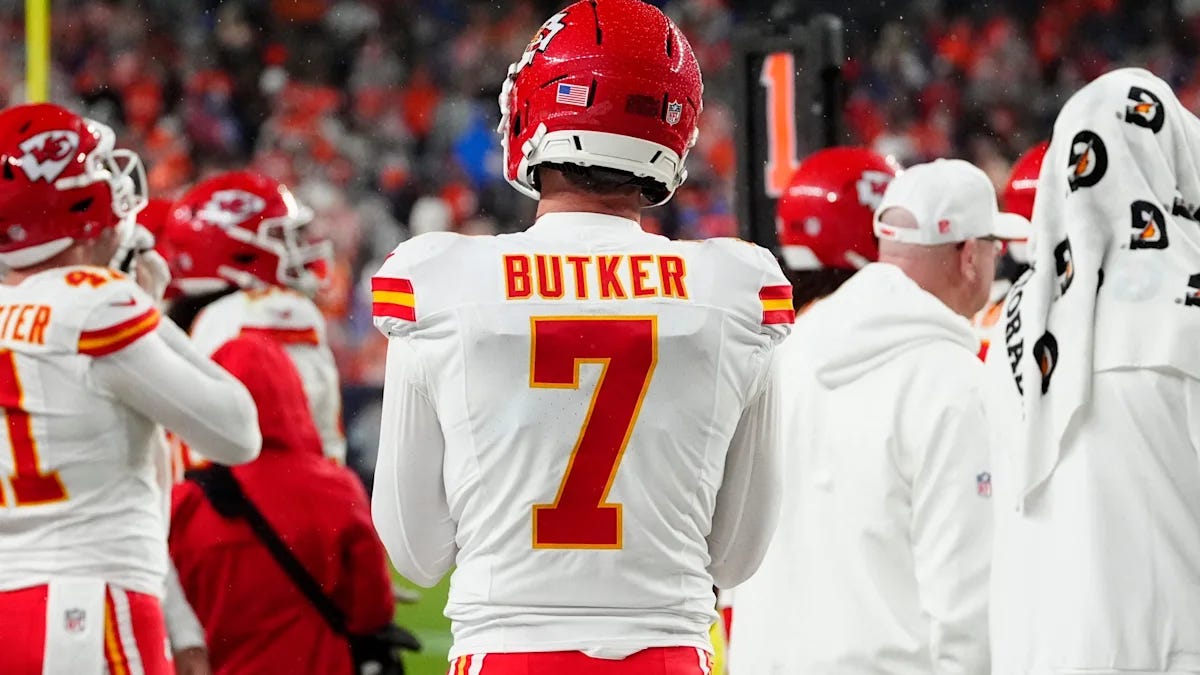
In multiple outlets where I consume football content, I’ve seen jokes about how struggling Kansas City Chiefs kicker Harrison Butker is influenced by this very Election Day. On First Things First, my favorite sports television show, co-host and big-time Chiefs fan Nick Wright made some waves by observing last week:
He started splitting his time between football and activism, and he hasn't been quite as good. That is just the timeline of it.
The response from some fans was to suggest that Wright, who’s liberal, wouldn’t make this point about a player engaged in partisanship from the other direction. While that’s probably so, it’s also so that the observation is…fairly true. Ever since Butker went viral with his overtly partisan Benedictine College commencement speech in 2024, he’s declined as a kicker.
Divorced from any judgment about Butker, I find this small-sample-size outcome interesting. In theory, simply kicking a ball shouldn’t be impacted by events like one’s activism. And yet, I see a connection between Butker’s struggles and an article from golf writer Shane Ryan that argued the 2026 U.S. men’s soccer team and 2025 U.S. Ryder Cup team were meaningfully, negatively impacted by a portrayal as villains in European media. Can it be so? Is it plausible that becoming persona non grata in major media outlets influences a man to shank on the field of play?