

I can relate to aspects of this sentiment from a liberal NFL data guy:
I am happy but like. Why did voters not do this two years ago. Nothing that has happened since has been surprising.
Though chaos is a baseline under Trump, I’d say specific outcomes over the last couple years were surprising, especially the Iran War and its resulting gas prices (A theoretical Republican value proposition is low gas prices). But I’m with the idea that the degree of electoral sentiment can be somewhat mysterious. In 2020, when our country was immersed in Covid misery and widespread unrest, this 2026 electoral result would have made about as much sense. But that election was close and this election is an absolute stomping.
The median voter, especially the midterm voter, is an older person who lives far away from me. Given where I reside, I have little insight into that individual beyond what I read in polls and see in ensuing elections. The sentiments about Trump that I’ve encountered in Bay Area real life, insofar as there is such a thing as “Bay Area real life,” remain largely unchanged since 2015. Then you learn that places like South Carolina suddenly feel quite differently.
There’s this impulse to reduce huge outcomes to one explanation but big events usually result from a perfect storm convergence of multiple factors. Gas prices will lose Republicans an election, but losing on this historic a level probably requires “Gas prices + Trump did X, Y and Z.”
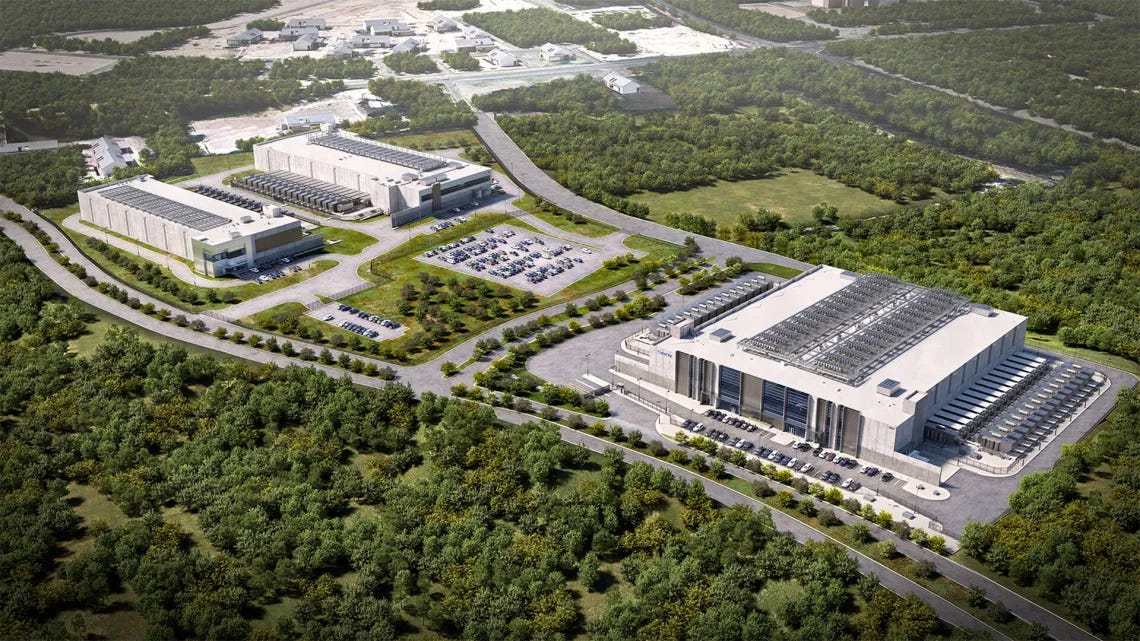
Among the many outcomes out of this sea change election, I’m interested in the idea that AI data centers were a potentially huge issue for voters. I’m not making the case that results would be different without the AI topic, but the sudden salience of it impresses me. Tuesday delivered a complete, nationwide voter rejection of AI data centers. As someone whose relationship to AI technology is mostly, “I write 7,000 words a week, so I appreciate how much better AI search is than traditional Google,” Tuesday’s anti-data Center revolt is a loud indicator that few people feel similarly about how AI has impacted their lives.
Quoting Semafor this morning:
American voters roundly rejected data centers nearly anywhere they were on the ballot Tuesday, a rebuke sure to rattle investors already growing skittish about the AI buildout. Residents in more than 30 localities across nine states voted for moratoriums, outright bans, and other measures, some in direct response to specific projects underway.
I first talked about this topic back when Jason Kelce, of all people, made a urine-soaked advertisement about it for Liquid Death. Kelce, or his team, jumped on an emergent popular trend. However you feel about the ad or data centers, those instincts did indeed match the public temperature. Sophie Cunningham further validated the Klosterman prophecy that she’s headed for a future vice presidency with her anti-data-center stance.
Data centers are big business in Texas, but probably not anymore. Governor-elect Gina Hinojosa, who defeated Greg Abbott, supports an immediate moratorium on new data-center development. Given voter trends, it’s hard to see many Texas politicians from either party fighting her on this trajectory. As former HOS guest Nikolai Yakovenko put it:
All the datacenter bans passed 🗳️ The chips will go elsewhere. Kazakhstan, Paraguay, Canada, Malaysia, who knows maybe even Europe
This is relevant to my backyard, despite how far I live from relevant elections. When Trump won in 2024, it accelerated this AI-boom in San Francisco, arguably and ironically the most anti-Trump area. Subjectively, I kept hearing from neighborhood friends about decadent Great Gatsby-esque office Christmas parties at their respective tech companies (I’m in an area where nearly every school family has a parent who’s an engineer, product manager, or some other job connected to the industry).
When I put it like that, I guess it tracks that the AI boom didn’t exactly endear itself to the larger populace. The idea of a bunch of techies playing with money made from a technology that gets you fired or potentially extinct as a species is…less than charismatic. Still, even if I can make retroactive sense of this backlash sentiment, it’s not like I ever would have independently assumed a new term like “data center” would greatly motivate voters. The only people I personally know who talk about data centers work on projects that build them. And yet, you see the results and the related polling. An AI strategist quotes the national NBC exit poll:
23% of voters said that AI and data centers were "crucial" to their vote in NBC exit polls. 56% said it was a "crucial or major" factor!
If that’s even close to true, it’s a pretty remarkable outcome. How many people had even heard of “data centers” three years ago?
People hate AI, even if they laugh at Gap Band memes made using AI. It’s the future, but apparently few people are positively compelled by that vision. I used to think a lot of the AI backlash was restricted to urban professionals, but no, this is total, across the board. Nobody is going to run a campaign anytime soon on touting the wonders of this technology.
There are huge implications to this reaction. I am insufficiently equipped to game out those implications. I am mostly making the observation that the American public is decisive on a topic I couldn’t have envisioned would hold much sway in, say, Kansas. “Everybody I know uses AI” is my personal “Everybody I know voted for McGovern.” I’m not surprised that the Trump GOP collapsed. I am surprised by how AI tech got rejected even more thoroughly.
As someone who has an educational background in AI and creates software models for a living, I think the AI backlash is a combination of people getting truly tired of big tech taking over more of their lives and the public faces of AI being about as punchable as imaginable. It's really not that hard to see why a group that simultaneously seems to want to put everyone out of work, and use large chunks of public land, often in existing neighborhoods, to do so is so hated.
Especially because for LLM based AI to be effective we really don't need this massive data center buildout in the first place. Smaller LLMs can approximate 90% of what the larger models can do and are much cheaper to use and maintain. The real reason for this crazy buildout is some odd obsession with a term no one in the industry can actually define, AGI. The real question Silicon Valley needs to ask itself is, how did a cult like movement (the rationalists, if you haven't heard of LessWrong.com or this movement it explains a lot) take over the biggest companies in the world?
As a consistent Republican voter who lives in the South, I was not surprised the GOP got destroyed last night, and for the following main reasons:
1) The conflict in Iran. Fairly obvious regarding gas prices, also hurting consumer good prices.
2) Grocery prices have not gone down in the last two years. A huge part of the what the GOP ran on in '24 was not fixed. Yet, Trump insisted on tariffs, which had a direct effect on consumers and were terrible from an optics standpoint. If you successfully timed the TACO trades and rode out the volatility, you made money in the markets, but the markets are not the economy. Income stagnation is not the way to appeal to the middle class, which Trump has never cared about. I will never understand those who vote against their financial interests.
3) Terrible candidates. Trump is why the Texas GOP nominated Paxton, who is despicable, and the SC GOP nominated Lindsay Graham's sister, which was indefensible. Trump did the same thing to the NC GOP in the '24 gubernatorial election with Mark Robinson. Trump has given political life to many in the GOP from '16 to '24, but over the course of the last two years he has taken it away. Last night was the culmination.
4) ICE invasions. Trump thought all of those Latinos who jumped ship to him in '24 would support the attempted mass deportation of people who looked liked them? Also, if Trump and his DOJ had their way, who wants to do the jobs those immigrants are filling and what happens when the price of labor increases?
Having stated the above, I do wholeheartedly agree AI data centers are wildly unpopular and Democratic candidates in both North and South Carolina portrayed their opponents as those who have and/or will take AI money. Fairly obvious that people do not want to live by a massive operation that they perceive will take their jobs, take up large swaths of real estate, and raise their electric and water bills.
But, Republicans had to support Trump, for funding and/or to get through a primary. Again, Trump giveth, Trump taketh away.