

My friends in NBA media tell me that fixing tanking is a huge topic. I believe them, because I too have received long emails from subscribers on how to line up this particular Rubik’s Cube.
For the record, the official House of Strauss solution doesn’t take a lot of brain power. I just favor equal lottery odds for all teams that miss the playoffs, with an increased playoff share of money to further disincentivize attempting to miss the postseason. The only “hard” aspect is that I want the Play-In tournament scrapped. I know some fans now like it, but wasn’t the main reason for this tourney that it prevented tanking? And now we have more tanking than ever, so…
The NBA Play-In is a great example of how Adam Silver era ideas can backfire longterm while appearing to “work” short term. When the field of potential playoff teams was expanded from 16 to 20, it was novel, and initially successful. Sure it was a little confusing for casual fans but bad teams eschewed tanking and the first play-in tournament was entertaining. But there’s a cost to diluting glory and stretching out an already long postseason. If the 10th best team in a 15 team conference is a potential “playoff team,” there’s less incentive to avoid mediocrity. Under a play-in structure, the prestige of the postseason took a quiet hit, and now franchises are back to aggressive tanking. While there’s still more interest in a play-in game than a regular season affair, the preceding tournament takes away from starting the NBA Playoffs, which used to be an event.
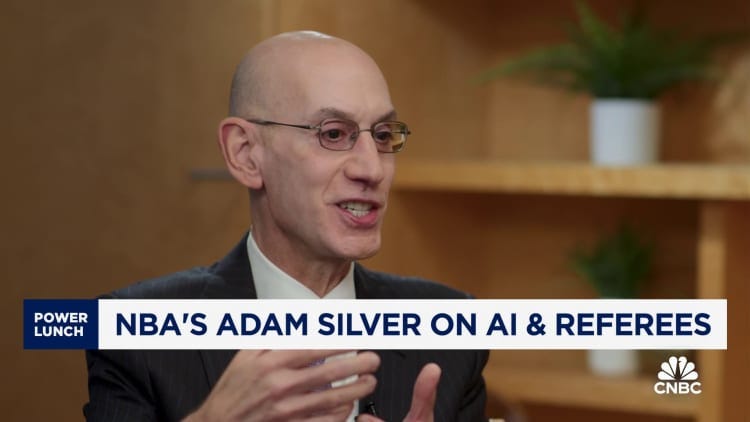
I wanted to write about just why it’s now more common to call for NBA commissioner Adam Silver’s job, but the truth is that I’m not sure how this happened. Many of the league’s issues have been present for some time. For years, the NBA forestalled a lot of criticisms with a simple, consistent strategy. If you, as a member of NBA media, criticized the league or pointed to its waning status, you’d get contacted. Mike Bass or someone subordinate to Bass would call you up and aggressively, though politely, press you on the topic. I came to both resent and respect the tactic. Why respect? Because I have a soft spot for battle done within boundaries. It’s perhaps that sense of old school propriety, though, that’s made me look askance at so many recent NBA “innovations.”
Gimmicks vs. Reforms
To simplify the Adam Silver era issue, it’s this: This NBA loves gimmicks, when what it needs are reforms. Here’s a hypothetical example to demonstrate the frame. Bill Simmons just said that the NBA must shorten its season and that this is “the most important decision of (Adam Silver’s) career.”
Reasonable minds can disagree on whether the NBA should do this, but I’d argue that, objectively, Bill Simmons is pushing for a reform. Why? Well, in part, because it’s somewhat painful to accomplish this end. Players and owners would have to give up guaranteed money to help the sport’s overall health and popularity. It’s totally against the “penny wise, pound foolish” ethos of a league that’s made a ton of TV money while losing half its audience. Right or wrong, shortening the season is no gimmick.
So what’s a gimmick? Obviously the aforementioned Play-In tournament. The NBA added a few games to an already overstuffed schedule so as to make money on the margins. That’s gimmicky. The NBA Cup is certainly also a gimmick. The league is trying to make the regular season somehow not the regular season, a half measure to deal with declining interest. Rather than take on hard choices, it’s another example of trying to have your cake and eat it too. The NBA wants to give up nothing in pursuit of what it wants, and life doesn’t tend to work that way.
Every All-Star Game alteration has been a gimmick, and yes I know the last one worked well enough under the lights. There’s no guarantee that “USA Stars, USA Stripes, and Team World” is a stable tradition though, especially since the league keeps changing the damned game. I favor returning to the old East vs. West system, but with a hard choice caveat: The NBA commissioner signs off on every selection, with consultation from fan voting, similar to how he picks injury replacements. If a player dogs it in an All-Star game, the commissioner owns the responsibility of banning him from All-Star status next year.
Players shouldn’t require money to play harder at ASG, because the game has never been about money. All-Star is about status, a status the players care about. The commissioner, long frustrated with the loafing, should actually weigh in on whether these guys deserve status as one of the sport’s top 24 entertainers. He should own whatever controversy follows from the punishment. You can call that a gimmick, but it’s the sort that Silver would be terrified to take on. And so I call it a reform.
I was about to say that I sort of like the play-in because it offers surging teams who are actually good a chance to make the playoffs - thinking about the 2023 Miami Heat who went to the finals or this year's Hornets. But then I looked it up and The Heat were actually the 7th seed at the beginning of the play in, so the play in didn't really change their chance, and it's looking like The Hornets can probably snag at least the 8th seed if their recent performance is durable.
All of these things are just relics of a bygone era.
Baseball plays a ton of games because when baseball started, 1) people just liked watching and playing baseball and 2) people paying money to watch the games was the way they made money. In the early days they even did barnstorming tours in the offseason and people paid to watch "exhibition" games. Championships did matter, but largely people showed up to be entertained and root for their team to win the game being played on that day. It was entertainment and didnt require additional "meaning". College football is the only sport that retains this effect to any degree.
Basketball and hockey followed suit when their leagues got up and running and had the same financial incentives and entertainment draws. All star games were cool because it was a rare occasion to see all these players.
Now fans demand something "more" than the game in front of them. It requires context and additional "meaning" for better or worse. So the original model, constructed over 100 years ago no longer serves those customers optimally. And the people who enjoy the regular seasons are the few remaining people akin to people 100 years ago - people who just like watching the sport played at a high level detached from a greater "meaning."