

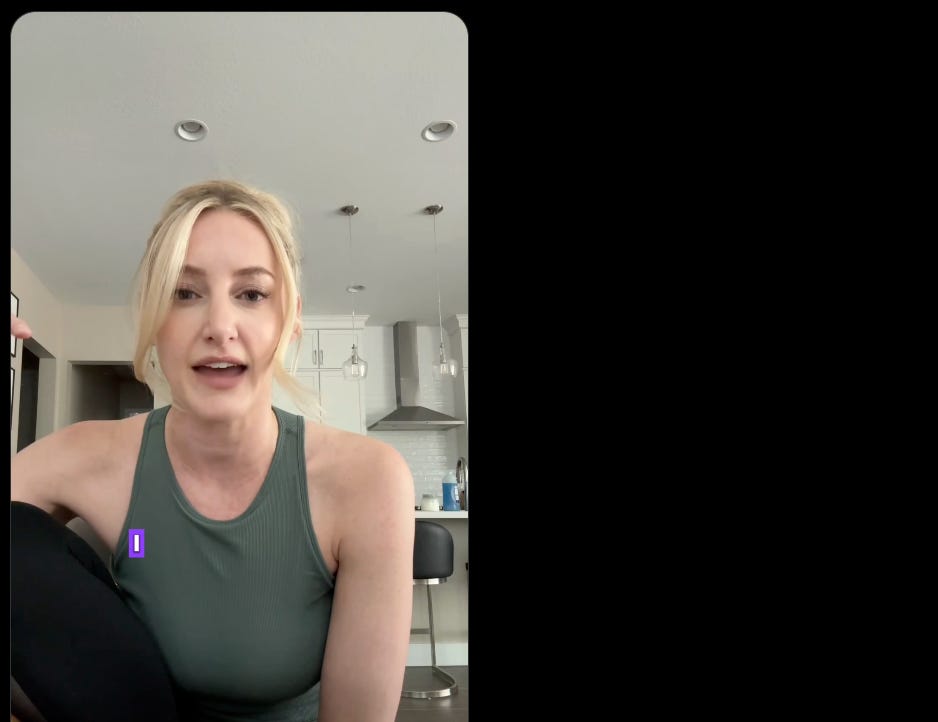
The following prompt from CFB/NHL reporter Stormy Normandt went viral in my industry:
Sports & media people - How much $$$ did you make your 1st job in the industry? Let's get some salary transparency going.
Since we’re honest here, I’ll posit that a lot of men were more inclined to respond because it’s an attractive blonde woman talking to you, with simulated eye contact, like you’re on a blind date. I’m not accusing my peers of being improper. I’m just saying there’s a potential Pavlovian element at play. Why yes ma’am, since you’re asking, I will tell you of my Horatio Alger rise from humble beginnings.
I’m not above telling such tales, but sometimes I just prefer to fast forward. The industry has been degrading since I entered it around 2008. It’s sad to consider how much better it was, back at the start of this journey. Rather than dwelling on how little I made at the beginning, I’d rather get into some theories about how one survives to the hopefully not so bitter end. I make a good living now in a largely impossible profession and have for about a decade. It’s plausible that I might have some useful advice for anyone crazy enough to attempt a similar path.
Admittedly, I can lean on self-effacement as a bulwark against obvious criticisms. I understand that Steph Curry’s rise massively benefitted me. Maybe if the Warriors never get good, and later historically great, I’m a school teacher. I’m not dumping on that profession, it just happens to be the one most often suggested to me by family members during the 2011 NBA lockout.
The short version of this story is that my first sports media job is eerily similar to the one I do today. Quoting my oh so famous lore:
It started back in 2008, when I made that clichéd post-college sojourn out to New York, with my best buddy Matt. Before I ventured out, a friend of a friend told me of a possible job opening. It was in the NBA, which seemed like an exciting prospect for a college graduate hiding out from the law school option. The NBA job was in a mysterious department called “Media Monitoring,” which sounded simultaneously Orwellian and cool. I applied right away and felt lucky to win the position, even if it paid only 17 grand a year after taxes. That was just enough for space in a rundown Brooklyn apartment, I reasoned, knowing nothing about what things actually cost.
The reality of Media Monitoring was not so cool. Every day, seven days a week, I’d wake up at 3:30 AM to beat the news cycle. Still in bed, I’d read literally everything written about the NBA in every major outlet. From there, I would send a summarizing memo to commissioner David Stern and others.
One major difference between then and now is that I wake up 30 minutes later, and do it five days a week instead of seven. The general shape of the job is the same though. Get up early, consume content, send out a memo to all of you. I do a couple podcasts every week as well, but that’s not the core of my business. The pods are important for keeping subscribers happy and perhaps maintaining my own sanity through the art of conversation, but articles remain the essential element.
Why so essential? There are two main reasons. The first is that I’m a better writer than I am a podcaster and the second is that many content competitors hate the act of writing. Not only do a lot of professionals, including sports writers, dislike writing, but they now delegate the operation to AI. For a snapshot of our times, high-end hedge fund investor Stanley Druckenmiller wrote an AI-directed op-ed article for the Wall Street Journal. He was shameless when caught, comparing his use of AI to how one might employ a calculator to do math.
I’m not offended that this happened, but I observe it. I run into tech industry workers who find out what I do and ask whether I’ve figured out how to get an LLM to do it for me. If they read what’s written at HoS they could maybe understand that this isn’t really an option. Perhaps they wouldn’t reach that conclusion, though, as they’ve embraced the idea that literally any human activity can be imitated and improved by the machine.
But nobody is paying me to imitate myself on autopilot. They want content from a human being for the same reason I prefer watching a real actor in a movie. Or for another example, yes, I could repeatedly cheer on Chinese robots racing faster than Usain Bolt at his peak, but I am a person, who relates more to fellow humans performing an ancient craft to the best of their abilities.
But let’s get back to the two main reasons I write every weekday: It’s what I do best, and other people don’t want to do it. Unless you’re a genius, this is a good formula for making money in a crowded field. You figure out your comparative advantage, and you figure out how to provide a value that others might ignore. I’m reminded of Mark Cuban’s story about how, as a kid, he raised money by hawking garbage bags door-to-door. I’m a terrible salesman and, as a teenager, I wouldn’t have wanted to pitch garbage bags. Young Cubes was a great salesman, and he realized there was profit in the less heralded field of guerrilla sanitation. Much of life is like this. There’s a lot of money to be made in what people don’t want to do, so long as people want it done.
Obviously, most would prefer to make money by being elite at inherently enjoyable activities like professional athletics. That’s a comically crowded field, though, so you’d better be one-in-a-million capable if you plan on making millions that way. Or, for a more industry-specific example, I’m jealous of how good Chris Ryan of The Ringer is at discussing movies and TV shows. That seems like a wonderful job, at least from the outside looking in. But because it’s a job so many can see themselves doing, success in that field is a particularly distant long shot.
I don’t have much insight into how Chris Ryan did it, beyond his own talent, but I have some sense of how the hosts of Pardon My Take built a massively popular sports talk podcast. A lot of fans would want to be like Dan "Big Cat" Katz and Eric "PFT Commenter" Sollenberger. They’re not purported “experts” or club-sanctioned standup comedians. The branding is that they’re just fun dudes, talking sports in a manner audiences can relate to.
Big Cat and PFT are popular because they’re just like us. This packaging probably undersells their talent, but let’s just pretend for a second and accept the premise. I can’t find where, but years ago, I came across an explanation from the co-hosts of how they rose to such a level. The basic takeaway that stuck with me: We do this every day.
Rain or shine, through the pandemic, the Pardon My Take boys put out a regular podcast. They offered fans an unbroken connection that could be depended on when the rest of the world was in turmoil. When going through my ups and downs running this newsletter, I kept returning to, and often resisting, that PMT insight. Consistency is a quality that compounds.
Now that I’m more consistent professionally, this all just goes better. Instead of being artistically neurotic and pacing around my office all week as I deliberate between two article ideas, I commit to sending you something every morning. It’s not easy, but it’s more sustainable than spotty service in search of engagement.
There’s something to be said, by the way, about how consistency is a buffer against that engagement beast. When your content is few and far between, you’re more vulnerable to needing a hit. That incentive structure can lead you towards attention-seeking contortions that might undermine integrity. Yes, in general, I must talk about what my audience is interested in, but no, I don’t need any individual article to save me. This allows me to relax, communicate (hopefully) absent much overstatement and just trust the process. When part of the business is regularity, there’s less of a need to stand out by acting abnormally.
Everything else is on the margins. Yes, I have sponsors (Shout out SportsPredict.com), but I don’t need to optimize for sponsors. Yes, I occasionally try other projects, but I don’t need other projects. I wouldn’t say that I’ve figured everything out because, like everyone else in the industry, I’m vulnerable to technological shifts beyond my control. I, like many Substackers, was growing explosively until Elon Musk bought Twitter and turned off the ability for articles to go viral on that platform.
But these are the basic principles of sports media success that I believe in and they are serving me well enough. Oh, and there’s a last part, related to much of the conversation surrounding Stormy Normandt’s question. Sports anchor Noah Chast responded:
I am BEGGING people to stop acting like their low TV/sports salaries are a badge of honor. It’s exploitation by the employer. Yes you have to grind and sacrifice in this industry but a full time working person should not have to live below the poverty line to get their start.
Alright but none of us are in control of how the industry ought to be. I don’t believe that, at the beginning, you have much power to value yourself beyond your own work ethic. There’s this irony where I see sports media people telling each other to require higher wages at these corporations but when they go independent, many of these same types don’t value themselves individually.
What I mean is, when they launch, the Substack or Patreon cost is cheap. I can’t speak to what a proper price point is for everybody, but I’ve observed that a lot of content creators are wary of demanding too much. And I get it. Customers convey being overburdened by subscriptions and it can come off as arrogant to cost more relatively. But if I’m being blunt, there’s often a “pick me” element to charging 4 bucks a month. You might have your own reasons for doing so, such as operating at a massive scale, or being a man of the people, but such pricing is usually the paywall version of saying, “I wrote a little thing,” on Twitter when it’s your 10,000 word opus. If you don’t believe in yourself, why should other people pay for your thoughts?
I’m relatively more expensive, and I know that. But I also provide roughly 20 articles a month, all narrated, combined with 6-8 podcasts. I stand by it. I believe in it. What I do is different from what other people do. I worked hard to make that happen and others can pay me or pay someone else. I can’t demand that dying industry publications protect me. Had I done so, back in the day, I’d be absent protection right now.
So, in summary: Zero in on what you do best, provide a service others won’t, do it consistently, and value yourself at the end (as opposed to the beginning). Oh, and I almost forgot an additional key element: Make sure you’re blogging about the Golden State Warriors when they draft Steph Curry.
I tend to consume written articles rather than podcasts, so the HoS shift has been amazing. Keep it up, please.
"I wrote a little thing" is as obnoxious as the Official Chargers account posting "you know who this mf look like low key ???"